

Robot Vacuum Mops USA
Add a review FollowOverview
-
Sectors Military
-
Posted Jobs 0
-
Viewed 221
Company Description
10 Things You Learned In Preschool, That’ll Aid You In Robot Vac
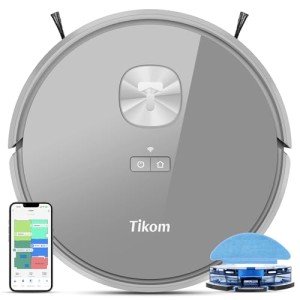 Choosing the Right Robot Vacuum
A robot vacuum can be a fantastic help in keeping your home tidy. It is however important to choose the right model to meet your needs. You must look for features such as navigation as well as self-emptying containers. Mopping and object recognition.
There are also models that can double as mops for cleaning up spills and pet messes. Some models have docks that automatically replenish the water tank, and switches out mop pads for you.
Here are a few examples of
A robot vacuum is an electronic device that utilizes sensors to detect and clean thoroughly. It has a motor which generates suction power that draws dirt, dust and other debris that is embedded in carpet fibers. It also has side brushes as well as a main brush that agitate and lift dirt and other debris into the dust bin. Some models include mopping pads that can be used for cleaning floors.
Robot vacuums employ laser or infrared sensors to navigate. These sensors create a map of the room and can help avoid collisions. They can locate objects and create digital zones of no-entry. Certain high-end robotics devices come with laser navigation dToF (distance to objects) which enables them to navigate more efficiently than conventional robots. You should be aware, however, that these robots can collect personal information and share it with others.
One of the best characteristics of a robotic vacuum is its capability to automatically return to its docking station when its battery runs low or the cleaning is complete. This can save you time and effort, especially in the case of a large home. Some models have automatic empty stations that move their contents into a larger storage bag.
If you want your robot vac to be as efficient as it can be, it must include a variety of smart features. The first step is to ensure that it’s compatible with the voice assistant you prefer. Then, you can use the app to schedule your cleaner, tracking its progress, and analyzing cleaning reports. You can also choose an area for your cleaner by simply pressing the screen.
Design
A robot vacuum is a powerful tool to help keep the cleaning needs of a facility under control. These machines make use of sensors and smart technology to map rooms, spot obstructions, and avoid collisions in order to avoid damage. They can also be controlled with apps for smartphones and interact with voice assistants. It’s crucial to be aware of the privacy consequences of these devices prior to purchasing one. Kim warns you that these devices could be sharing your personal data with third-party companies. It’s essential to inquire about the privacy policies for data protection. Kim also suggests that you keep your apps and software updated, as some manufacturers will not support older versions.
A good robot vacuum should have a small size to fit into tight spaces and reach beneath furniture. It should be simple to operate and maintain. The design should be durable and pleasing to the eye. A minimalist approach to design will also help reduce production costs and deliver better battery performance. This is accomplished by reducing components to reduce assembly complexity and selecting materials that are compatible with durability and ease of manufacturing.
The navigation system of robot vacuums is a important feature. The early models relied on simple bump-and go technology, but more advanced robots today use lidar mapping to create precise maps of every room. This allows them to avoid hitting furniture or getting stuck on rugs and wires. Lidar is a cutting-edge technology that can detect objects by sending invisible light beams off of them. It can also measure the distance between obstacles which makes it more precise than laser scan.
Most robot vacuums also come with a docking station which serves as a home and charging point. If the battery is running low or the job is completed and the robot is ready to return to the dock for a recharge and then resumes cleaning the area it left.
Cleaning
The cleaning capabilities of robot vacuums are based on its motor. It creates suction to pull dirt off the floor. It utilizes a combination of brushes and mop to scrub your home thoroughly. Some models also use advanced navigation systems and mapping to avoid collisions with furnishings. In addition, they can clean multiple times and return to the docking station to charge. It is essential to choose an energy-efficient model in order to keep your electricity bill from rising.
To maximize your robot’s performance it is recommended to purchase one with a powerful filter system. A quality filter will trap more than 99 percent allergens, and is ideal for those with sensitive skin. Additionally, you must regularly clean and maintain the filters to ensure their durability. You should replace them whenever they get blocked by pet hair or other particles.
In addition to navigation sensors, most robots feature cliff sensors that stop them from falling down stairs and other obstacles. Some robots are equipped with virtual walls that you can set up to prevent the device from entering certain areas. It’s also an excellent idea to invest in one with a big dustbin that allows it to clean larger areas without having to empty it often.
You should also take into consideration the robot’s battery lifespan and noise level. Some brands use one rechargeable lithium-ion battery, while others have two batteries which can be swapped whenever needed. In addition, you should consider a remote control, which will allow you to operate the robot from any location. You can also plan cleaning times and keep track of the robot’s progress. Smart robots should be compatible with the Wi-Fi network at your home, so it can connect to other devices and receive updates.
App control
The app for a robot vacuum is a central control center for monitoring and managing its functions. It offers a range of features including automatic cleaning home maps remote control, voice commands, and automatic charging. These features are helpful for those who are unable to move around or who find using the touchscreen a challenge. This makes the robot more accessible to use for older people or those with visual impairments.
A high-quality robot vacuum should include a variety of sensors that aid in navigating your home and avoid collisions. The most common sensors are infrared, laser and camera-based sensors. The first uses image recognition to identify and avoid objects, whereas the other creates a virtual map. These maps assist the robot to clean systematically while avoiding the same spots and cleaning repeatedly. The best ones also allow you to direct the robot using a tap on your phone.
Some robots, in addition to their smart sensor for floor type mapping are able to detect different surfaces. They can adjust their settings accordingly. For instance, ECOVACS DEEBOT is equipped with advanced AIVI 3D technologies and lidar sensors similar to those found in self-driving cars for precise navigation. It also can keep track of different rooms and stick to the app-drawn boundaries around smaller zones within these spaces, like stacks of Legos.
Some robots also have self Cleaning vacuum cleaner-emptying bins that automatically takes its trash into an even larger bin at the docking station. This feature is especially useful if you live with kids or pets. It can help you reduce costs by reducing the frequency of cleaning sessions.
Cost
Imagine a world where you never have to vacuum or mop again. Imagine a world where clean floors are just a press away. This is now possible thanks to robot vacuums and mops. However, these smart devices aren’t cheap. A robot vacuum can range in prices ranging from $500 for the basic model up to $1,800 for a unit that has all the bells and whistles. It can also remove pet hair from carpets.
When selecting a robotic vacuum, choose one with a navigation system that can map your entire house without manual intervention. Early models used bump sensors to guide them, but modern units are more sophisticated, using LiDAR technology (similar to that of self-driving cars) to detect walls and obstacles by bouncing invisible beams of light off of them. The result is a precise map that helps the robot navigate the area with ease. You can also interact with the maps, for instance, dropping virtual boundaries or creating restricted areas at any time, and then send the robot to specific places with a tap on your phone.
When looking for a robot vacuum, size and storage are also important factors to take into consideration. Check the height to ensure it can get under your furniture, and then look for a large bin to reduce the number of times you need to empty it. A self-emptying dock could be an excellent feature.
Keep in mind that while a robot vacuum will help keep your home tidy, it will not remove all of the dirt and debris from the nooks and crannies. Therefore, you’ll still need to vacuum the old-fashioned way from time to time. It’s also a good idea to keep in mind that the robot’s battery may need replacement in the future, and you might have to replace consumable parts such as mop pads and filters.